


 Contact Now


Send Message
Privacy statement: Your privacy is very important to Us. Our company promises not to disclose your personal information to any external company with out your explicit permission.
Products


Model No.: ST-Oleanolic Acid
Types Of: Herbal Extract
Traits: Powder
Location: Leaf
Extraction Method: Liquid-Solid Extraction
Package: Drum
Place Of Origin: China
Product Name: Oleanolic Acid
Active Ingredient: Oleanolic Acid
Assay: 98%
Testing Method: HPLC
Physical Appearance: White to off-white powder
Ingredient Type: Plant-derived triterpenoid compound
Heavy Metal Testing: Available
Microbiological Testing: Available
Quality Documentation: Certificate of Analysis (COA)
Application Areas: Dietary supplements, functional foods, cosmetics, skincare, and pharmaceutical research
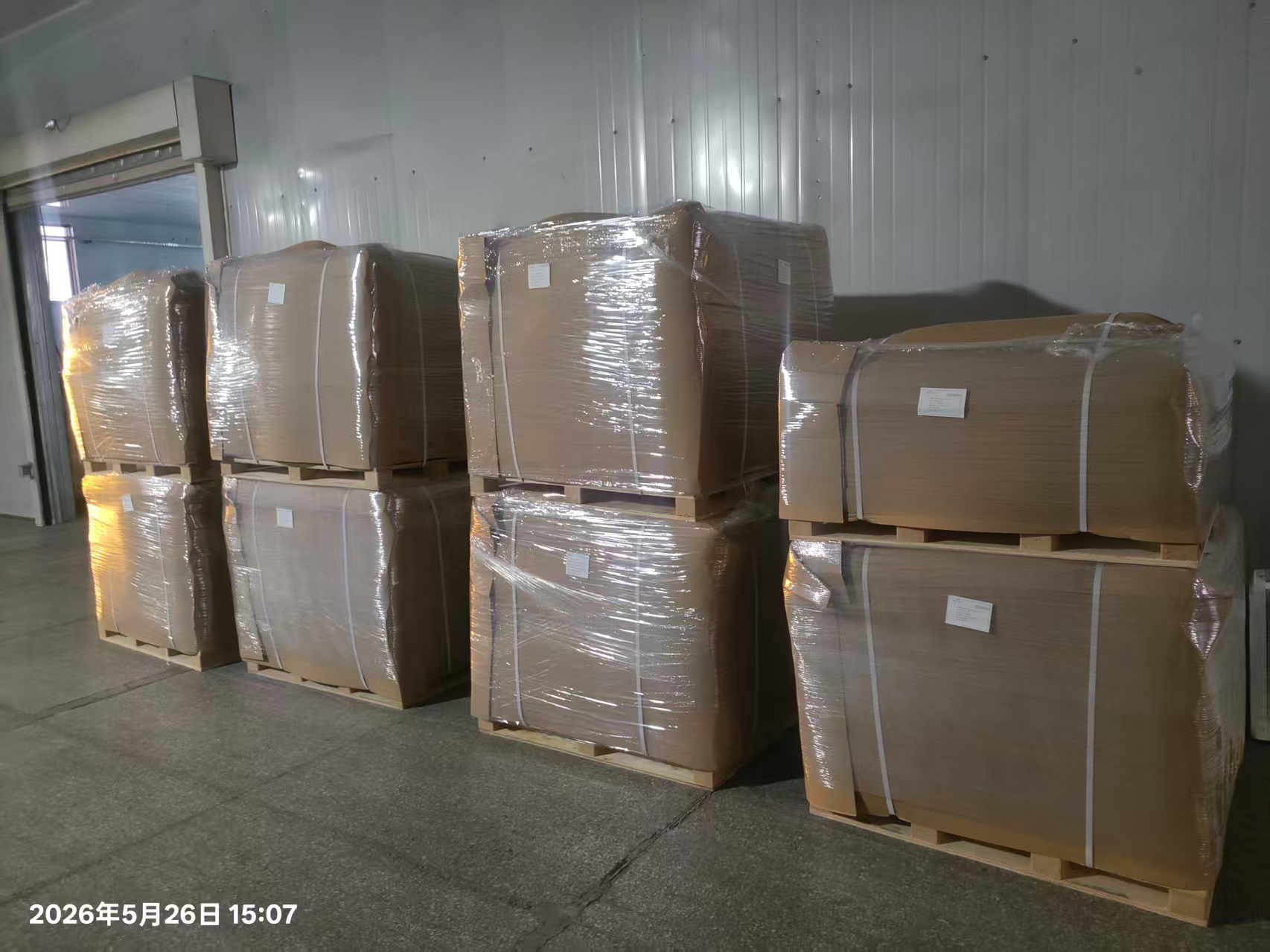
Packaging: 100000KG
Transportation: Ocean,Land,Air,Express
Port: SHANGHAI,QINGDAO,BEIJING
Payment Type: T/T,Paypal
Incoterm: FOB,EXW,FCA,DDP,Express Delivery


Oleanolic Acid is a naturally occurring pentacyclic triterpenoid compound found in various plant species. It is commonly identified as a plant-derived bioactive constituent and is studied for its physicochemical properties and potential functional applications. As a botanical active ingredient, Oleanolic Acid is relevant to the development of dietary supplements, functional foods, cosmetic formulations, and research-oriented botanical products.
Oleanolic Acid 98% HPLC is a standardized powder ingredient with an assay specification of 98%, determined by high-performance liquid chromatography (HPLC). The material is supplied as a white to off-white powder. Its defined assay level provides a measurable quality parameter for ingredient evaluation, formulation development, and batch-to-batch quality assessment.
In botanical ingredient processing, standardization is important because naturally derived compounds may vary depending on their botanical origin, extraction procedures, purification methods, and subsequent processing conditions. A specified Oleanolic Acid content helps establish a consistent reference for formulation calculations and technical documentation.
Oleanolic Acid 98% HPLC can be considered for different formulation environments depending on the intended application, product requirements, and compatibility with other ingredients. Its use in dietary supplements, functional food development, skincare products, cosmetics, and pharmaceutical research requires consideration of applicable regulations, formulation characteristics, and relevant quality standards.
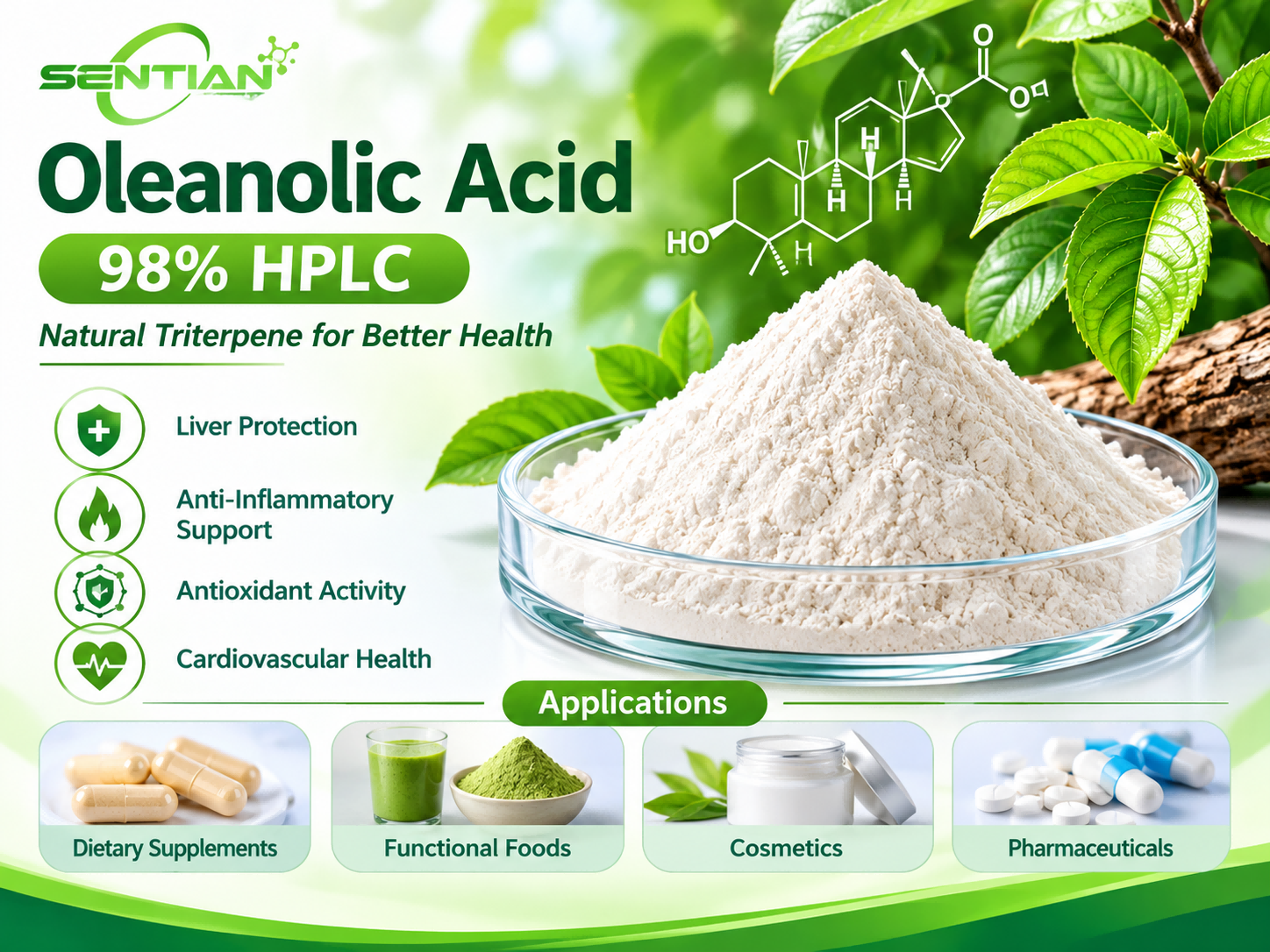

Oleanolic Acid is a triterpenoid compound with a defined chemical structure and a range of physicochemical characteristics relevant to ingredient research and formulation development. Its standardized concentration makes it suitable for applications that require a controlled level of a specific botanical active constituent.
One important formulation consideration is its limited water solubility. This characteristic may influence ingredient dispersion, dissolution behavior, and the selection of suitable formulation systems. Developers working with Oleanolic Acid may need to evaluate appropriate solvents, carriers, emulsification systems, or other formulation technologies according to the intended product format.
In dietary supplement development, Oleanolic Acid can be evaluated as a botanical active ingredient in capsule, tablet, or other suitable delivery formats. Formulation design should account for the assay concentration, ingredient compatibility, processing conditions, and the physical characteristics of the finished dosage form.
For functional food applications, its suitability depends on the food matrix, processing conditions, regulatory requirements, and the intended level of incorporation. Solubility and dispersion characteristics should be assessed during product development to determine whether additional formulation strategies are necessary.
In cosmetic and skincare formulations, Oleanolic Acid may be investigated as a botanical-derived functional ingredient. Its incorporation requires consideration of the formulation base, compatibility with other cosmetic ingredients, stability, and the intended application method. The choice of delivery system can influence how the ingredient behaves within an emulsion, cream, lotion, or other cosmetic preparation.
For pharmaceutical research, standardized Oleanolic Acid provides a defined material for laboratory investigation, analytical studies, and formulation-related research. Its 98% HPLC specification offers a reference point for evaluating material composition and supporting experimental consistency.
These characteristics make assay verification, physical inspection, and appropriate quality documentation important considerations when selecting Oleanolic Acid for technical applications.

Oleanolic Acid 98% HPLC powder has several potential application contexts across botanical ingredient development and research.
1. Dietary Supplements
Oleanolic Acid can be evaluated as an active botanical constituent in dietary supplement formulations. Potential product formats include capsules, tablets, and other solid dosage systems. During formulation development, manufacturers should consider the ingredient's assay level, powder properties, compatibility with excipients, and applicable dietary supplement regulations.
2. Functional Foods
In functional food development, Oleanolic Acid may be investigated for incorporation into selected food formulations. Its use requires an assessment of the food matrix, processing temperature, dispersion characteristics, and relevant food ingredient regulations. Formulation studies can help determine suitable incorporation methods and processing conditions.
3. Skincare and Cosmetic Products
Oleanolic Acid is also relevant to cosmetic ingredient research and skincare formulation development. It may be considered for creams, lotions, emulsions, and other topical preparation formats. Formulators should evaluate its compatibility with the cosmetic base, solubility characteristics, stability, and applicable cosmetic ingredient requirements.
4. Pharmaceutical Research
For pharmaceutical and laboratory research, Oleanolic Acid can serve as a standardized plant-derived compound for analytical investigations and formulation studies. Its defined assay specification supports material characterization and the preparation of research samples with a documented concentration.
5. Botanical Active Ingredient Formulations
Oleanolic Acid can also be considered for specialized botanical formulations involving plant-derived active constituents. In these applications, ingredient identity, assay consistency, analytical verification, and compatibility with other formulation components are important technical considerations.
The suitability of Oleanolic Acid for any specific application should be established through formulation testing and a review of the regulatory requirements in the intended market. Its inclusion in a product does not independently establish a health benefit or therapeutic effect.

Oleanolic Acid 98% HPLC is characterized by its specified active compound content and standardized analytical testing. The 98% assay specification indicates the target content of Oleanolic Acid measured using high-performance liquid chromatography. HPLC provides an analytical approach for determining the concentration of the target compound and evaluating the composition of the tested material.
Standardization is particularly relevant for botanical ingredients because differences in raw material characteristics, extraction conditions, purification procedures, and manufacturing processes can affect the final composition. An established assay specification provides a consistent technical reference for ingredient selection and quality evaluation.
In addition to active ingredient testing, quality assessment may include heavy metal testing and microbiological testing. These evaluations provide supplementary information about selected quality and safety parameters of the material. The actual test results and acceptance criteria should be reviewed in the corresponding batch documentation.
A Certificate of Analysis (COA) is provided to document the analytical results and relevant quality information for the supplied batch. Buyers and formulation developers can use this document to review the specified assay, testing information, and available quality parameters before incorporating the ingredient into their products.
When evaluating Oleanolic Acid for commercial formulation or research applications, it is important to review the batch-specific COA, verify the analytical method, and assess the ingredient against the technical and regulatory requirements of the intended application.
Overall, Oleanolic Acid 98% HPLC powder is a standardized botanical-derived ingredient with defined assay content, white to off-white physical appearance, and supporting heavy metal and microbiological testing. These characteristics provide a technical basis for its evaluation in dietary supplement development, functional food research, cosmetic formulation, pharmaceutical investigation, and other botanical active ingredient applications.
Product Categories : Raw Health Products > Plant Extract


Home > Products > Raw Health Products > Plant Extract > Oleanolic Acid 98% HPLC Powder


Send Inquiry

Ms. Linda
Tel:
Fax:
Mobile Phone:+86 18602905487
Email:sales3@sentianbio.com
Address:Room 2002, Building B, Economic Development Building, Weiyang District, Xian, Shaanxi
Mobile Site

Privacy statement: Your privacy is very important to Us. Our company promises not to disclose your personal information to any external company with out your explicit permission.
Fill in more information so that we can get in touch with you faster
Privacy statement: Your privacy is very important to Us. Our company promises not to disclose your personal information to any external company with out your explicit permission.