


 Contact Now


Send Message
Privacy statement: Your privacy is very important to Us. Our company promises not to disclose your personal information to any external company with out your explicit permission.
Products


Model No.: ST-Natural Vitamin E
Origin: China
Packaging: 1kg/bag, 25kg/drum
Transportation: Ocean,Air,Express
Place of Origin: China
Supply Ability: 100000kg/month
Port: Shanghai,Tianjin,Qingdao
Payment Type: T/T
Incoterm: FOB,EXW,CIF,DDP


Natural Vitamin E is commonly obtained from vegetable oil processing streams, including soybean oil, sunflower oil, and other plant-based sources. Its composition may contain different tocopherol homologues, including alpha-, beta-, gamma-, and delta-tocopherol. The relative proportions depend on the source material and processing conditions.
For ingredient selection, the distinction between natural and synthetic Vitamin E is important. Natural Vitamin E is generally identified as d-alpha-tocopherol or naturally sourced tocopherol preparations, while synthetic Vitamin E is commonly identified as dl-alpha-tocopherol. The chemical form, concentration, carrier system, and assay method should be considered when comparing different ingredient specifications.
In B2B formulation development, Natural Vitamin E is used in dietary supplements, functional foods, fortified food products, and selected cosmetic formulations. Its suitability depends on the intended application, dosage form, stability requirements, and applicable regulatory standards.
Natural Vitamin E is a fat-soluble ingredient, which influences its incorporation into different formulation systems. Unlike water-soluble vitamins, it is generally incorporated into oil-based preparations or formulated with suitable carriers and delivery systems when used in products requiring dispersion in aqueous environments.
The principal nutritional form of Vitamin E is alpha-tocopherol. Other tocopherol homologues may also be present in natural mixed-tocopherol preparations. Their individual proportions should be evaluated when selecting an ingredient for a particular formulation.
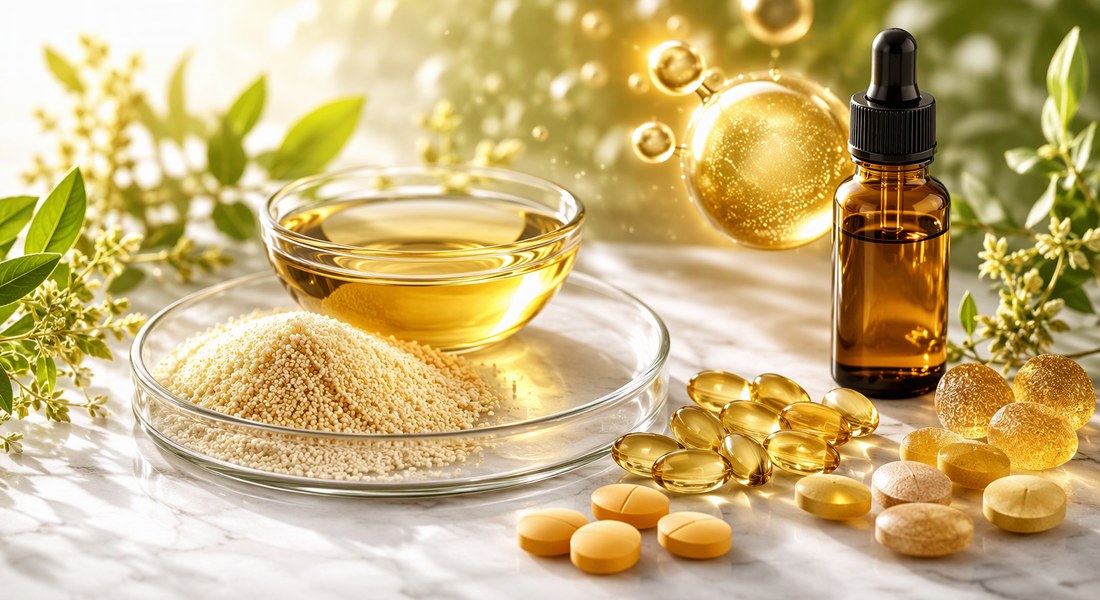
Natural Vitamin E can be supplied in different physical forms. Oil preparations are suitable for softgel capsules, oil-based liquids, and other lipid-containing formulations. Powder preparations may be developed using carriers or encapsulation technologies to improve handling and compatibility with dry blends. The actual carrier composition and active content should be confirmed through the product specification.
Oxidation stability is an important consideration during storage and processing. Exposure to oxygen, light, elevated temperatures, and unsuitable packaging conditions may affect ingredient quality. Formulation developers should evaluate antioxidant stability, packaging compatibility, and storage conditions according to the specific product format.
When calculating formulation quantities, the declared Vitamin E activity and assay basis should be reviewed. Different forms and concentrations should not be treated as directly equivalent without checking the applicable activity conversion and labeling requirements.
Natural Vitamin E is used in several categories of nutritional and personal care formulations.
Dietary Supplements
It can be incorporated into softgel capsules, hard capsules, tablets, and liquid supplements. Oil-based forms are particularly suitable for lipid-containing dosage systems, while powder forms may be considered for dry blending and tablet manufacturing.
Functional Foods and Nutritional Formulations
Natural Vitamin E may be included in fortified foods, nutritional powders, meal replacement products, and other food formulations. Formulation design should account for fat content, processing temperature, product shelf life, and the compatibility of the ingredient with other components.
Oil-Based Formulations
Oil preparations can be incorporated into lipid-based blends and liquid nutritional products. The selection of carrier oil, concentration, and packaging system should be based on the intended product specifications.
Cosmetic Formulations
Natural Vitamin E may be used in creams, lotions, serums, and oil-based personal care products. Its role in a cosmetic formulation depends on the intended product function, ingredient concentration, and compatibility with the overall formulation system. Cosmetic claims should follow the regulations of the target market.
The appropriate grade should be selected according to the intended application, physical form, active content, and applicable food or cosmetic requirements.
Natural Vitamin E may refer to a single tocopherol form or a mixture of naturally occurring tocopherols. The distinction should be clearly stated in the ingredient specification.
For d-alpha-tocopherol products, standardization generally focuses on the declared active content and the analytical method used to determine it. For mixed-tocopherol products, the specification may include individual alpha-, beta-, gamma-, and delta-tocopherol concentrations as well as total tocopherol content.
HPLC is commonly used to identify and quantify tocopherol components. Other quality control parameters may include heavy metals, residual solvents, moisture or loss on drying, and microbiological limits, depending on the ingredient form and intended application.
A complete technical specification should identify the botanical or vegetable oil source, chemical form, active concentration, carrier ingredients, assay method, and applicable quality requirements. A batch-specific Certificate of Analysis should be used to verify the actual composition and test results.
Product Categories : Raw Health Products > Nutritional Powder


Home > Products > Raw Health Products > Nutritional Powder > Natural Vitamin E: Natural Vitamin E Oil and Powder for Nutritional Formulations


Send Inquiry

Ms. Linda
Tel:
Fax:
Mobile Phone:+86 18602905487
Email:sales3@sentianbio.com
Address:Room 2002, Building B, Economic Development Building, Weiyang District, Xian, Shaanxi
Mobile Site

Privacy statement: Your privacy is very important to Us. Our company promises not to disclose your personal information to any external company with out your explicit permission.
Fill in more information so that we can get in touch with you faster
Privacy statement: Your privacy is very important to Us. Our company promises not to disclose your personal information to any external company with out your explicit permission.