


Send Message
Privacy statement: Your privacy is very important to Us. Our company promises not to disclose your personal information to any external company with out your explicit permission.
News
Home > Industry News > Lion’s Mane Mushroom Extract Gains Momentum in the Global Cognitive Health and Functional Mushroom Market
2026-11-12
Functional mushrooms are becoming increasingly popular in the global nutraceutical, dietary supplement, and functional food industries. Among the most recognized varieties, Lion’s Mane Mushroom (Hericium erinaceus) has attracted growing attention due to its potential applications in cognitive health, memory support, focus, and overall wellness.
Traditionally consumed in East Asian cuisine, Lion’s Mane has evolved into a popular functional ingredient in the international health and wellness market. Today, Lion’s Mane mushroom extract is widely explored by supplement brands, ingredient distributors, and nutraceutical manufacturers looking to develop innovative products for modern consumers.
According to a September 2026 industry analysis published by NutraIngredients, functional mushroom sales in the tracked US retail channels reached approximately $494.7 million, increasing 23.2% year over year. Lion’s Mane remained the leading mushroom variety, with sales reaching $224.3 million and annual growth of 18.8%.
These figures highlight the expanding commercial opportunities for Lion’s Mane extract and other functional mushroom ingredients in the United States and international markets.
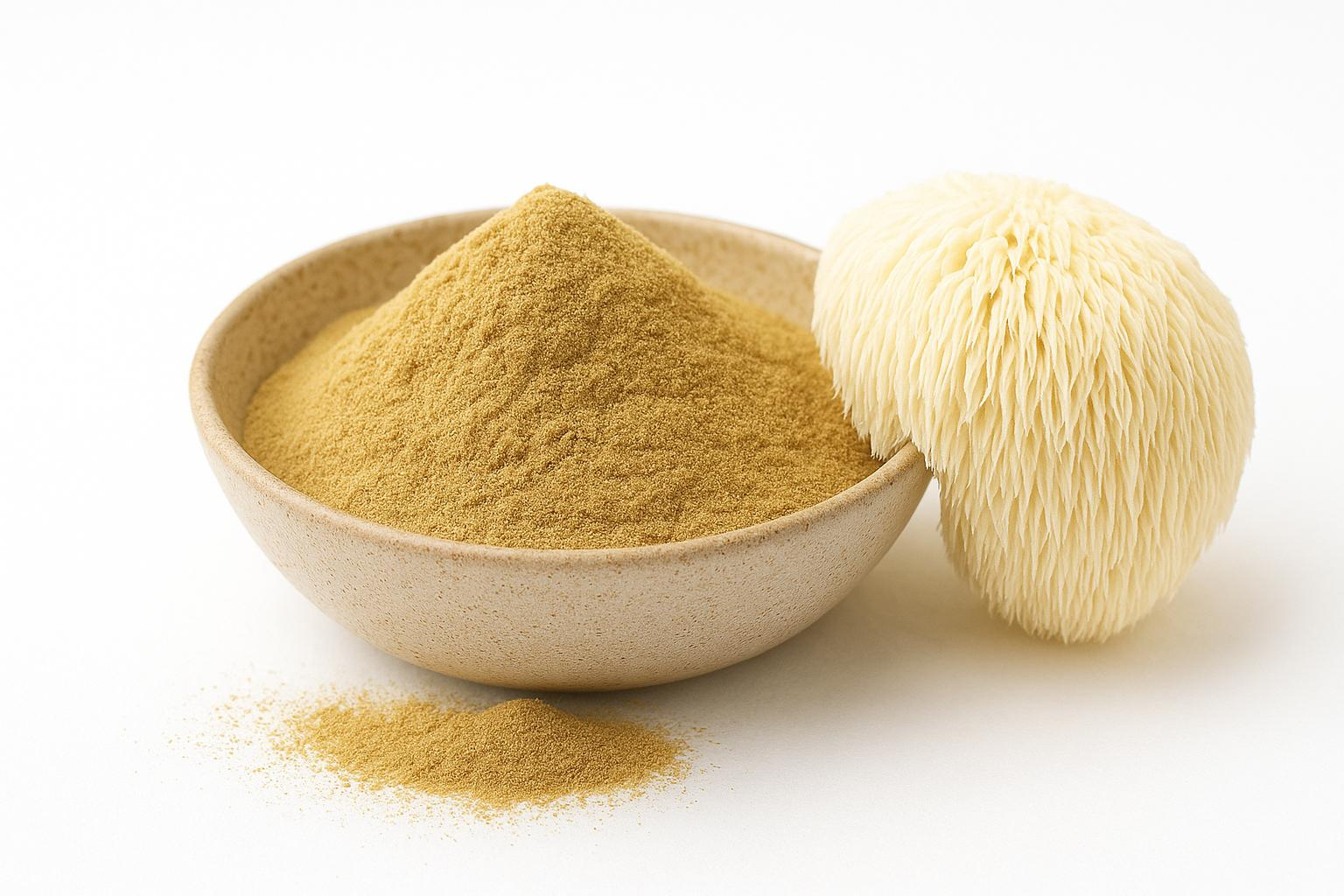
One of the key factors behind the popularity of Lion’s Mane mushroom extract is increasing consumer interest in cognitive wellness.
Modern consumers are paying more attention to daily focus, memory, mental performance, and healthy aging. This has created opportunities for natural ingredients positioned for cognitive health and brain wellness.
Lion’s Mane contains several bioactive compounds, including:
Hericenones: Naturally occurring compounds mainly identified in the fruiting bodies.
Erinacines: Bioactive compounds particularly associated with the mycelium.
Polysaccharides: Complex carbohydrates commonly investigated for their biological activities.
Beta-glucans: Naturally occurring polysaccharides studied for their potential immunomodulatory properties.
Scientific research has investigated the potential relationship between Lion’s Mane compounds and nerve growth factor (NGF) activity, neuroprotection, and cognitive function.
A randomized, double-blind, placebo-controlled clinical study published in Frontiers in Nutrition in 2026 evaluated Lion’s Mane supplementation in 109 adults over eight weeks. The researchers reported improvements in certain measures of visual attention, working memory, sleep quality, and mood.
Although further large-scale and long-term clinical research is needed, these findings are contributing to continued interest in Lion’s Mane as a functional mushroom ingredient.
Lion’s Mane mushroom extract is increasingly incorporated into different supplement formulations, particularly products targeting cognitive wellness and everyday nutrition.
Common applications include:
Capsules and Tablets
Lion’s Mane extract capsules and tablets remain convenient options for dietary supplement brands. Standardized mushroom extracts can be incorporated into single-ingredient products or multi-ingredient cognitive support formulas.
Functional Mushroom Blends
Lion’s Mane is frequently combined with other functional mushroom ingredients, including Reishi mushroom extract, Cordyceps extract, Chaga extract, and Turkey Tail mushroom extract.
These combinations allow manufacturers to develop multi-mushroom formulations for different wellness positioning.
Powdered Supplements
Lion’s Mane mushroom powder and extract powder are suitable for powdered dietary supplements, drink mixes, and superfood formulations.
Functional Beverages and Coffee Alternatives
The growing popularity of mushroom coffee, functional latte powders, and wellness beverages is creating additional opportunities for Lion’s Mane extract.
Gummies and Convenient Supplement Formats
Gummies and other convenient delivery formats are attracting attention from supplement brands seeking to make functional mushroom products more accessible to consumers.
Industry data also indicates that functional mushroom gummies are experiencing particularly strong growth, while cognitive health remains an important application category.
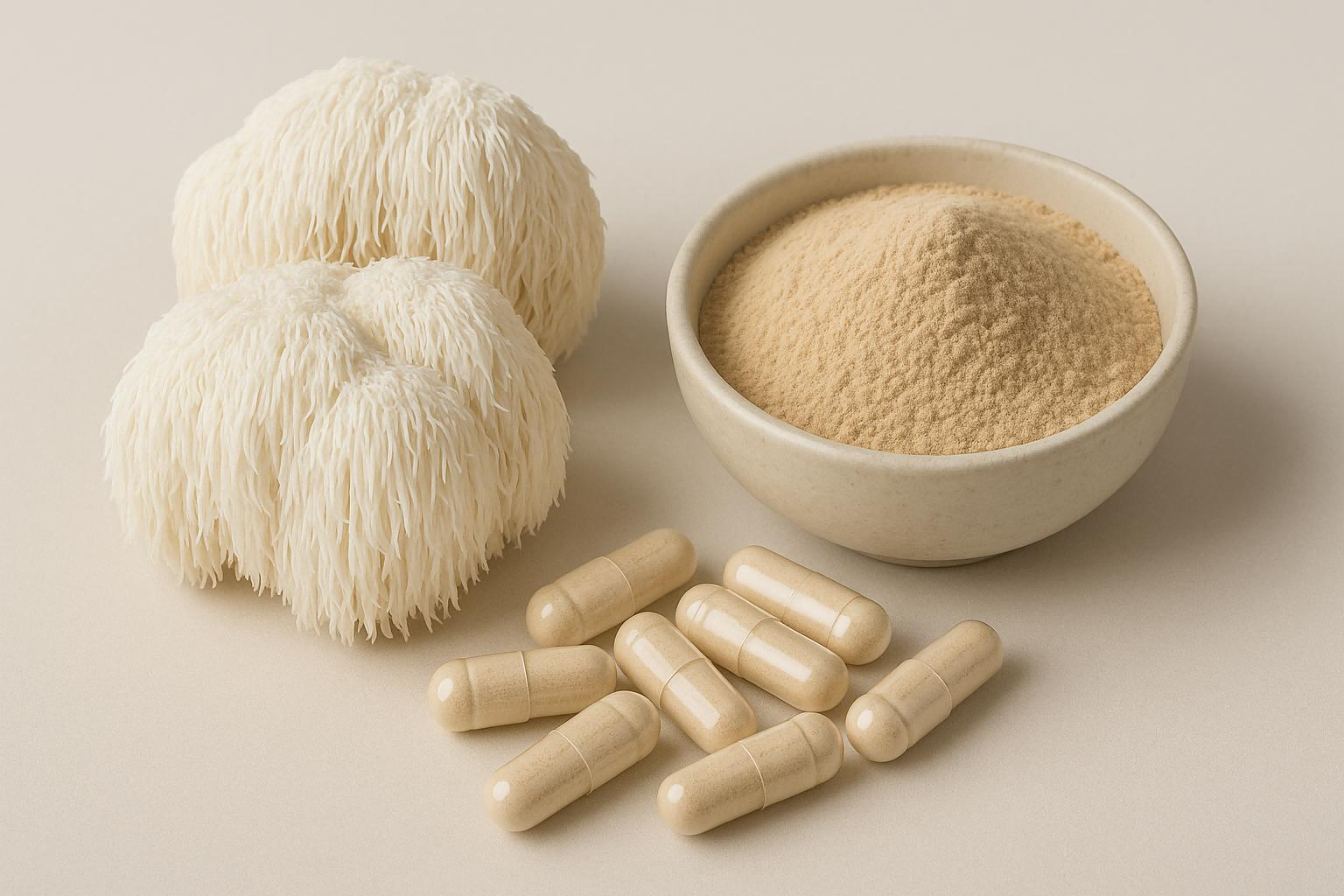
For supplement manufacturers and ingredient buyers, understanding the difference between Lion’s Mane fruiting body extract and mycelium extract is important when selecting raw materials.
| Comparison | Fruiting Body Extract | Mycelium Extract |
|---|---|---|
| Source | Mushroom fruiting body | Mushroom mycelium |
| Key compounds | Hericenones, polysaccharides | Erinacines, polysaccharides |
| Common applications | Dietary supplements, powders, blends | Specialized mushroom supplements |
| Quality considerations | Extraction method, beta-glucan content | Cultivation substrate, erinacine profile, testing |
Neither source is automatically superior in every application. The appropriate choice depends on the desired active compounds, product positioning, formulation requirements, and quality specifications.
For B2B buyers, it is important to check the raw material source, extraction process, active compound specifications, carrier content, and batch-specific Certificate of Analysis (COA).
As the functional mushroom market expands, supplement brands are paying greater attention to ingredient transparency and product consistency.
When sourcing Lion’s Mane mushroom extract, buyers should consider several important factors:
Botanical identification: Confirm the scientific name, Hericium erinaceus.
Raw material source: Identify whether the extract comes from fruiting bodies or mycelium.
Extraction ratio: Check the extract ratio, such as 10:1 or 20:1, where applicable.
Polysaccharide content: Review the specified polysaccharide assay and testing method.
Beta-glucan content: Request a separate beta-glucan specification when relevant.
Erinacine and hericenone analysis: Consider targeted testing when these compounds are important to the formulation.
Contaminant testing: Review heavy metals, microbiological limits, pesticide residues, and other relevant parameters.
Documentation: Request a COA, specification sheet, and supporting quality documents.
It is worth noting that polysaccharide content and beta-glucan content are not interchangeable measurements. Buyers should evaluate the actual analytical methods rather than relying on a single percentage figure.
For companies developing Lion’s Mane mushroom supplements for international markets, regulatory compliance should be considered during ingredient selection and product development.
In the European Union, the regulatory status of Lion’s Mane ingredients may depend on the raw material, extraction process, composition, and intended application.
For example, a 2025 consultation published by the European Commission classified a specific Lion’s Mane fruiting body extract powder produced through hot-water and ultrasound-assisted extraction as non-novel food. This conclusion applies to the preparation described in that consultation and should not automatically be extended to every Lion’s Mane extract or mycelium preparation.
For the US market, manufacturers should also pay attention to applicable dietary supplement requirements, ingredient safety documentation, labeling rules, and permissible structure/function claims.
Working with a qualified Lion’s Mane extract supplier can help buyers obtain the technical documents needed for their product development and regulatory assessment.
The functional mushroom industry is moving beyond traditional mushroom powders toward more specialized, standardized, and application-oriented ingredients.
For Lion’s Mane mushroom extract suppliers, several opportunities deserve attention:
Cognitive health supplements: Ingredients for focus, memory, mental clarity, and healthy aging product concepts.
Premium mushroom blends: Combinations of Lion’s Mane, Reishi, Cordyceps, Chaga, and other functional mushrooms.
Functional beverage ingredients: Mushroom coffee, instant drink powders, and ready-to-mix wellness beverages.
Private label supplements: Customized Lion’s Mane capsules, tablets, gummies, and powder formulations.
Standardized mushroom extracts: Ingredients with clearly defined specifications and improved batch-to-batch consistency.
As consumer awareness grows, ingredient quality, traceability, scientific research, and formulation flexibility are likely to become increasingly important competitive factors.
Lion’s Mane mushroom extract is becoming an important ingredient in the evolving functional mushroom and cognitive wellness markets. Growing interest in brain health, memory support, focus, healthy aging, and natural wellness is creating new opportunities for supplement manufacturers and raw material suppliers.
For ingredient buyers, choosing the right Lion’s Mane extract requires more than comparing prices or extraction ratios. Raw material sources, active compound profiles, analytical methods, quality documentation, and regulatory suitability all deserve careful consideration.
With continued product innovation and increasing demand for functional mushroom ingredients, Lion’s Mane extract is well positioned to remain an interesting ingredient for the global nutraceutical and dietary supplement industry.
Share to:


Send Inquiry

Ms. Linda
Tel:
Fax:
Mobile Phone:+86 18602905487
Email:sales3@sentianbio.com
Address:Room 2002, Building B, Economic Development Building, Weiyang District, Xian, Shaanxi
Related Products List
Mobile Site

Privacy statement: Your privacy is very important to Us. Our company promises not to disclose your personal information to any external company with out your explicit permission.
Fill in more information so that we can get in touch with you faster
Privacy statement: Your privacy is very important to Us. Our company promises not to disclose your personal information to any external company with out your explicit permission.